In November I spent three days in Madrid with my student Oran. We looked at art, tasted wine with my friends, browsed a book fair, ate at a market, watched a Chaplin film and ended with live blues. Every conversation was in Spanish.
There was no classroom. The city was the lesson, and every stop gave us something real to talk about.
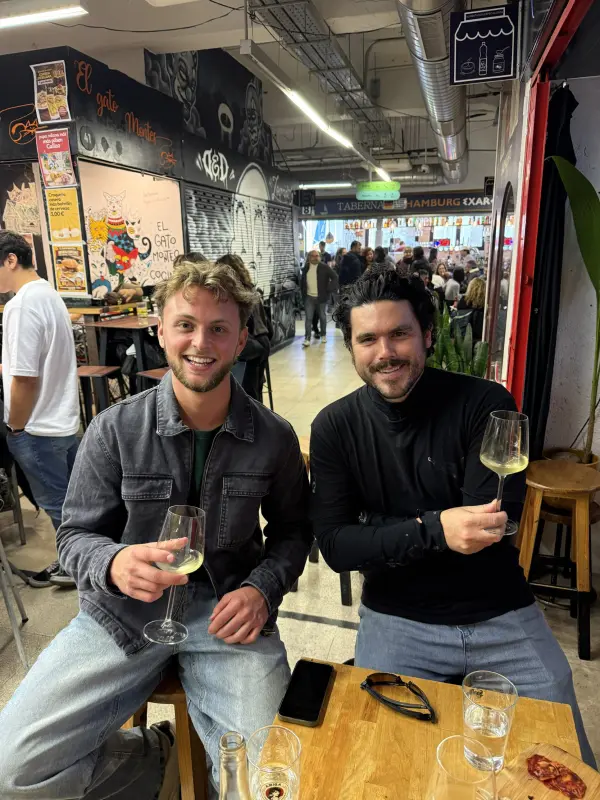
Oran and me with a glass of white at Mercado de San Fernando.
The trip at a glance
Day 1
Condeduque, a natural wine tasting in Chueca, tarot at Medium
Day 2
El Retiro, a book fair, Mercado de San Fernando, Chaplin at Sala Equis
Day 3
The Reina Sofía (the Civil War, the dictatorship, La Movida), then blues at Bar Intruso
Language
Spanish all day, with me, my friends in Madrid and a new friend from Jalisco
Day 1 Art, wine and a rainy night in Chueca
Conde DuqueCalle del Conde Duque
Condeduque: toys and contemporary art
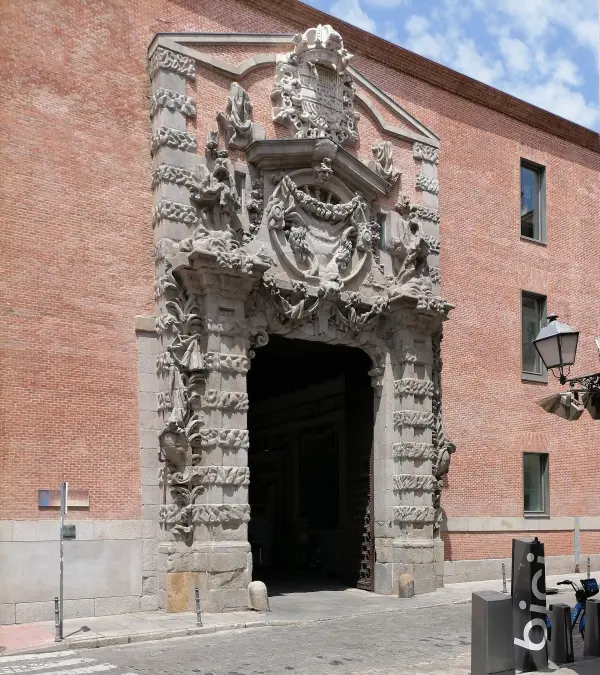
I met Oran at his hostel and we walked to Condeduque, the royal guard barracks Pedro de Ribera built for Felipe V from 1717, now one of Madrid's biggest cultural centres. We started with the toy exhibition, Juguetes para entender el mundo: a century of Spanish science toys (1880–1980) grouped by what makes them move, from clockwork to steam to sunlight, plus fourteen women scientists such as Marie Curie as Spanish dolls. Everyone has a story about the toys they had as a child, which makes for an easy first conversation.
Upstairs, at the Museo de Arte Contemporáneo, we walked through El Museo portátil, the city's collection from the avant-gardes to today, and the reconstructed study of the writer Ramón Gómez de la Serna, inventor of the one-line greguería. We stopped at the paintings that caught our eye: describing what you see and saying why you like it is a lot of useful Spanish in one hour.
Spanish we used
¿Qué te transmite este cuadro?
What does this painting make you feel?
De niño yo tenía uno igual.
I had one just like it as a kid.
¿Cómo funciona? Se mueve con vapor.
How does it work? It runs on steam.
Pedro de Ribera's Baroque doorway at Condeduque, built for Felipe V's royal guard. Photo: Carlos Teixidor Cadenas, CC BY-SA 4.0, via Wikimedia Commons.
La AlquimiaBarrio de Chueca
A natural wine tasting at La Alquimia
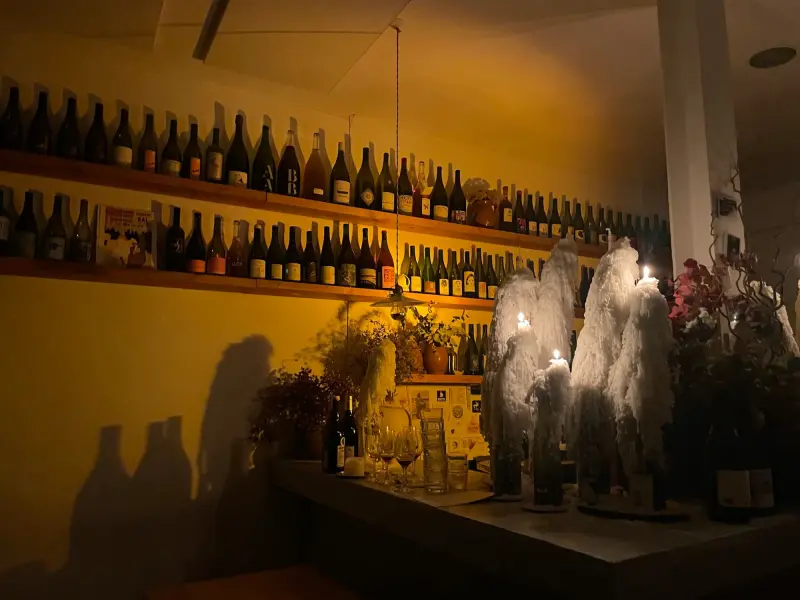
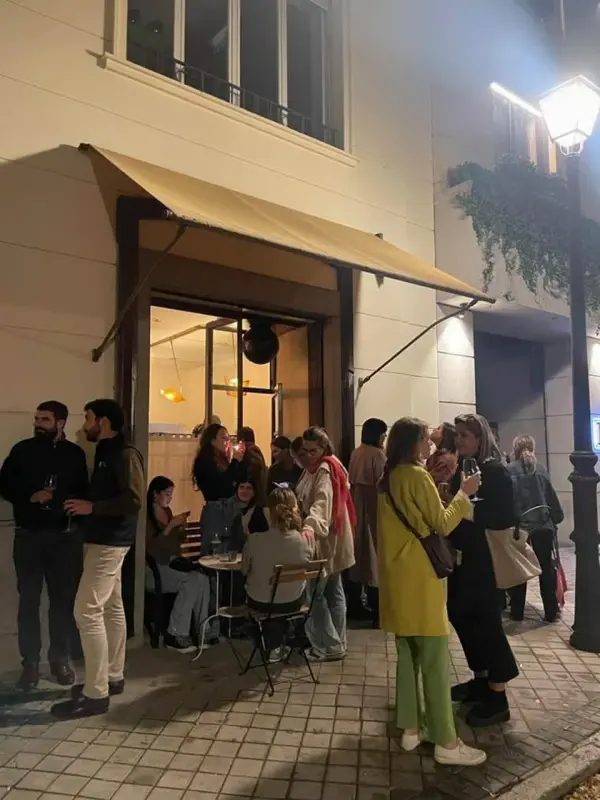
Next stop was La Alquimia, a natural wine bar in Chueca, where I introduced Oran to some of my friends who live in Madrid. We did a wine tasting in Spanish: grape varieties, how to describe what you smell and taste, and what makes a wine "natural". This is what a classroom can't give you: a real conversation with Madrileños, at their speed.
Inside La Alquimia: shelves of natural wine by candlelight.Outside La Alquimia, where the conversation spills onto the street.
Spanish we used
¿Me pones una copa de tinto?
Can I get a glass of red?
Huele a frutos rojos.
It smells of red berries.
MediumCalle del Pez
Cocktails and tarot at Medium
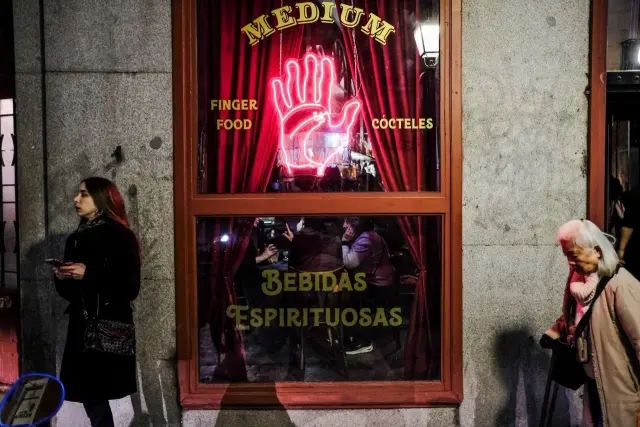
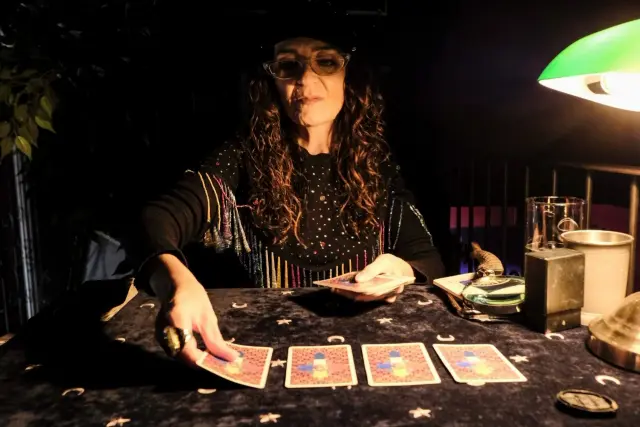
It was raining, so we finished the night at Medium, one of the best-known cocktail bars in Madrid. That night there were live tarot readings, all in Spanish. Great listening practice: dramatic, full of the future tense, and you want to catch every word.
Medium's window on calle del Pez: a neon palm and bebidas espirituosas, a pun on "spirits".A tarot reading at Medium, all in Spanish.
Day 2 Autumn in El Retiro, a first book, a market and Chaplin
El RetiroParque del Buen Retiro
A walk through El Retiro
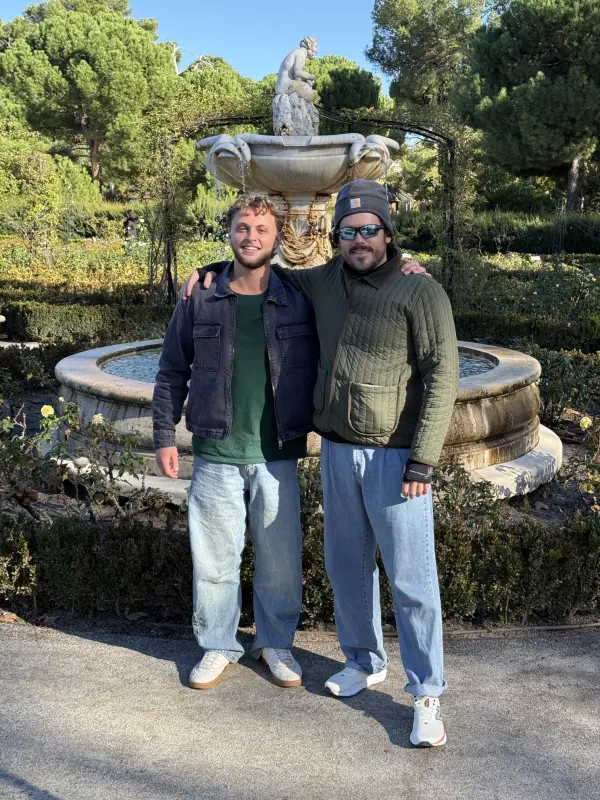
We met for a slow walk through El Retiro. In autumn the park turns gold and red, and we took our time with it. A walk is a relaxed way to talk: no table, no menu, just the view and whatever comes up.
Oran and me in the Rosaleda, El Retiro's rose garden.
Feria de librosJunto al Retiro
The book fair: Oran's first book in Spanish
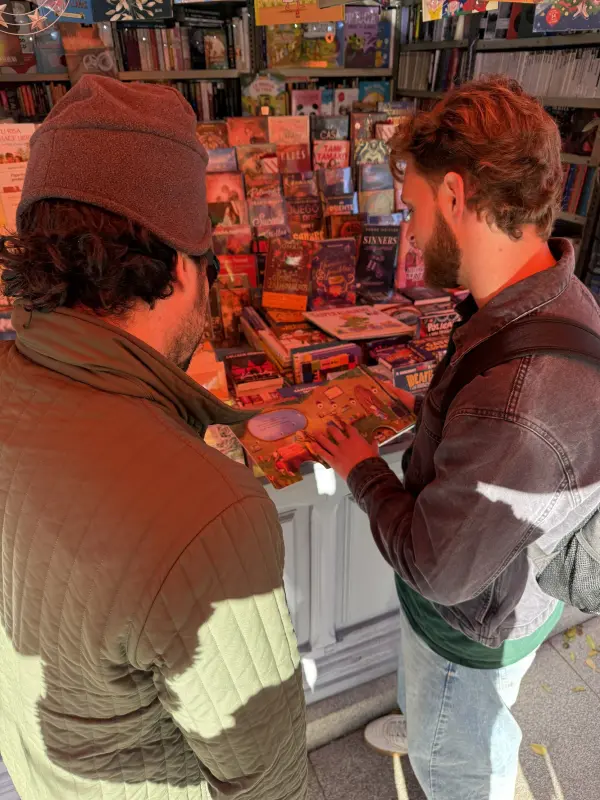
As we left the park we came across a feria de libros, a street book fair. We talked about literature, the authors we each read and what to read when you are learning. Oran bought a book in Spanish, his first one. That is a milestone: the moment Spanish stops being a subject and becomes something you read for yourself.
He chose Harry Potter y la cámara secreta, the Spanish translation of Harry Potter and the Chamber of Secrets. It is a smart pick, and one I recommend to every learner: when you already know the story in English, you can follow the plot without a dictionary and pick up new words from context.
Spanish we used
¿Qué me recomiendas para empezar?
What would you recommend to start with?
¿De qué trata?
What is it about?
Browsing the stalls at the book fair.
San FernandoMercado de Lavapiés
Mercado de San Fernando
From there we went to Mercado de San Fernando, where we met at a friend's stand. We picked up the wine conversation from the night before and moved on to a bigger question: why food matters so much to culture in Spain and across the Spanish-speaking world. Then we walked around the market, one of the liveliest in the city, full of stalls, noise and people talking.
Spanish we used
¿Qué es lo típico de aquí?
What is the local speciality here?
En España se vive alrededor de la mesa.
In Spain, life happens around the table.
Sala EquisCalle del Duque de Alba
Chaplin at Sala Equis
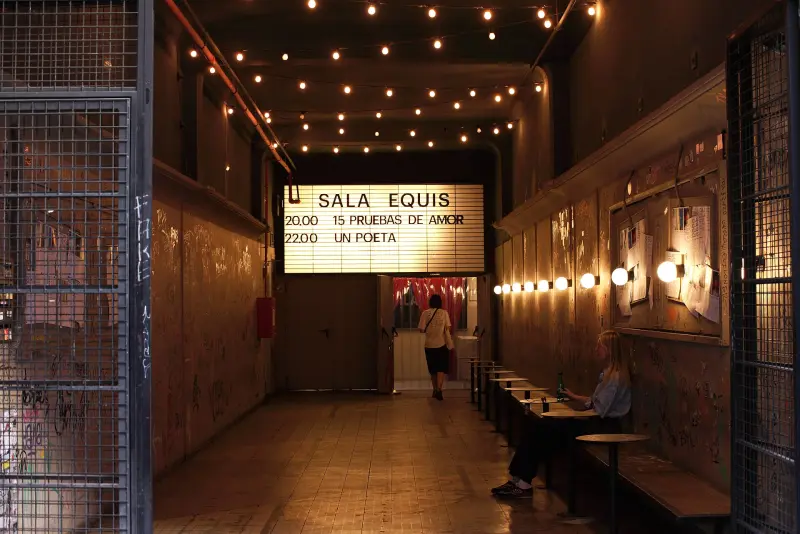
After an afternoon break we met again in the evening at Sala Equis, a cinema and bar that shows films from across the Spanish-speaking world. That night they were screening Charlie Chaplin. A silent film is a clever choice for a learner: you understand the story without subtitles, and then you discuss it afterwards in Spanish, which is where the real practice is.
For the last day Oran brought along David, a friend he had made at his hostel. David is from Jalisco, Mexico, and he doesn't speak English, so the only way for the two of them to talk was in Spanish. The three of us spent the day at the Reina Sofía, and it worked like a history lesson in two parts: the Civil War and the dictatorship, and what Spain became after it.
Part 1: Guernica, the Civil War and the dictatorship
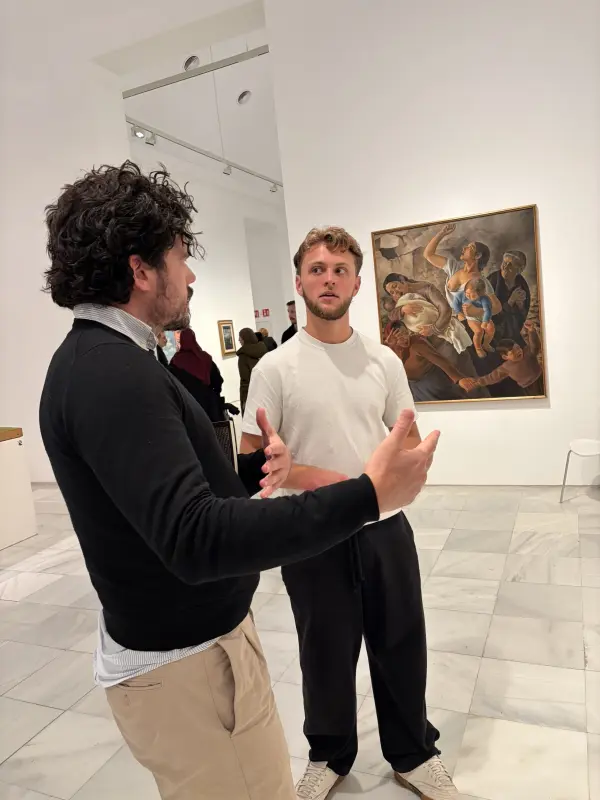
We started with Picasso's Guernica, painted in 1937 after the bombing of the Basque town of Gernika, and the rooms around it. The paintings there show the war from the ground: civilians running from the bombers, soldiers sleeping next to their rifles.
Standing in front of these works is the best way to talk about the Spanish Civil War (1936–1939) and the dictatorship that followed. You cannot really understand contemporary Spain without it: the transition to democracy, the debates about historical memory that are still in the news, and why so many writers and artists went into exile in Mexico and Latin America. We had that conversation in Spanish, in the room, and Oran did a lot of the talking.
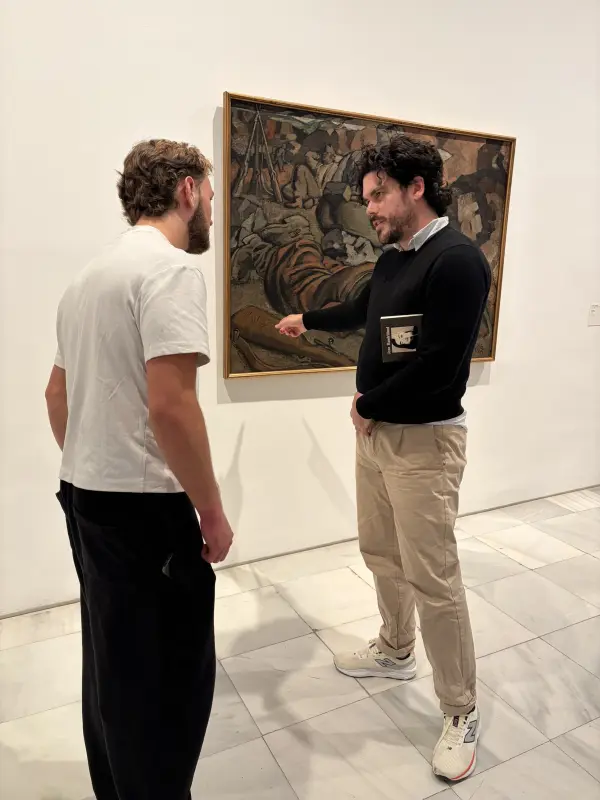
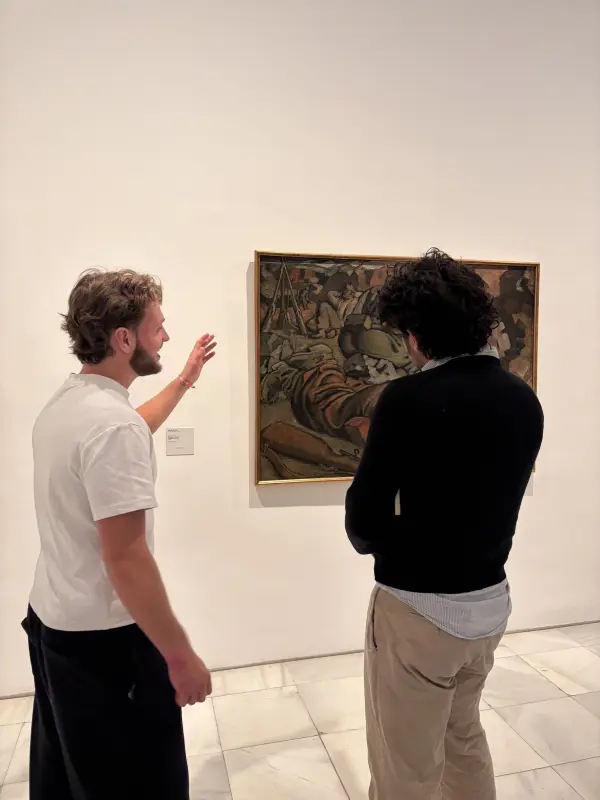
One painting held us for a long time: Descanso en el frente (Resting at the Front, 1937) by Ramón Puyol, an artist from Algeciras who made posters for the Republic during the war. It shows exhausted soldiers asleep among the rocks, rifles stacked behind them. No battle, no heroes, just tiredness. It was shown at the 1937 Paris International Exhibition, the same exhibition where Guernica hung in the Spanish Republic's pavilion.
From the war we moved on to what came after it: almost forty years of dictatorship under Franco (1939–1975). We talked about censorship, exile, the silence many families kept for decades, and how all of that still shapes Spanish politics and culture today.
Spanish we used
¿Qué representa el toro?
What does the bull represent?
La Guerra Civil dividió a muchas familias.
The Civil War divided many families.
Yo veo cansancio, no heroísmo.
I see exhaustion, not heroism.
Durante la dictadura había censura.
There was censorship during the dictatorship.
Talking about the Civil War in front of a painting of civilians under bombardment.Reading Ramón Puyol's Descanso en el frente (1937) together.Then it's Oran's turn to explain what he sees in the Puyol, in Spanish.
Part 2: from the Transition to La Movida
Then we went up to the museum's new collection display, opened in 2026, which follows about fifty years of Spanish art from the Transition to democracy to today. The highlight for us was La Movida madrileña: the explosion of music, comics, photography, film and nightlife in Madrid after Franco died in 1975, when a whole generation went out to make up for lost time.
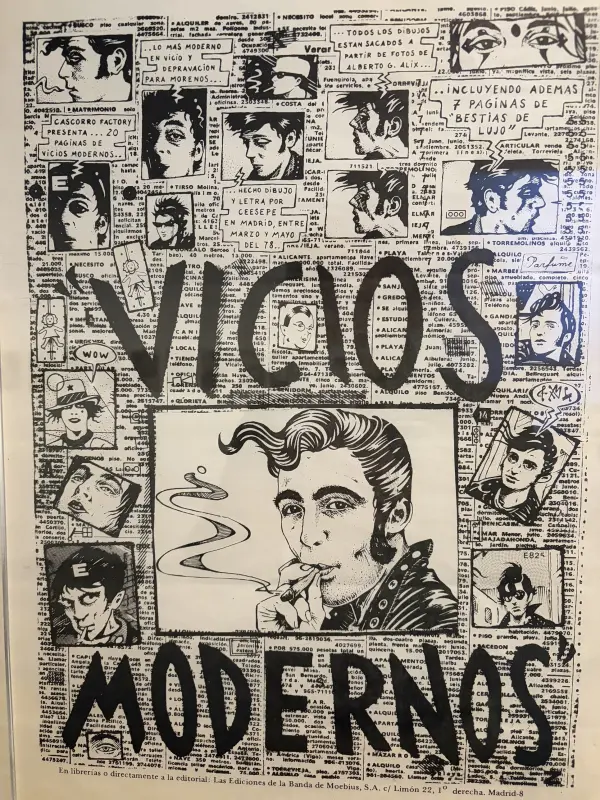
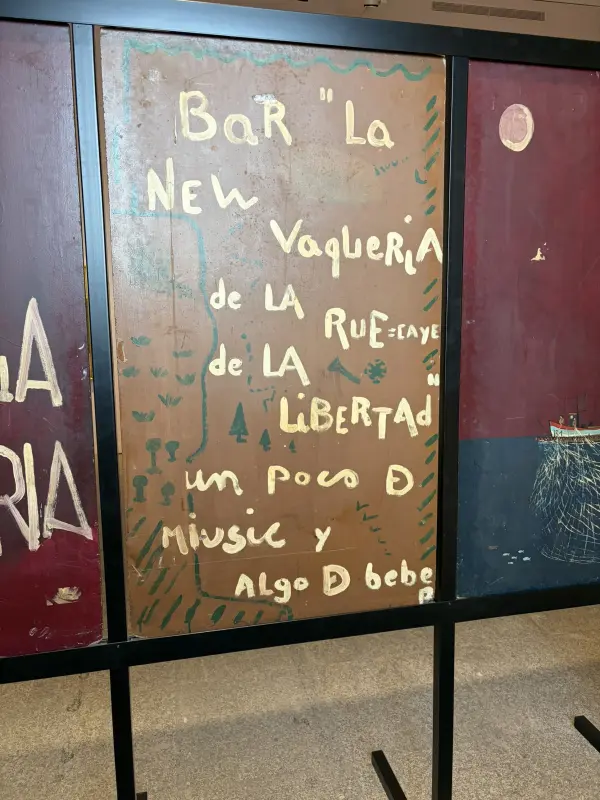
The rooms are full of the illustrator Ceesepe: his comic Vicios modernos, drawn in Madrid in 1978, and the painted boards he made for La Vaquería, a bar on calle de la Libertad. The boards mix Spanish, English and French ("un poco de music y algo de beber") and they still carry bullet marks. The same section brings together other names from the period, such as Nazario, Ouka Leele, Alberto García-Alix and the filmmaker Iván Zulueta.
For a learner it is a gift: the language on the walls is slang, jokes, classified ads and bar signs, the Spanish people actually spoke. And it connects straight back to the nights before. The Madrid we had been going out in is the one La Movida made.
Spanish we used
¿Qué fue la Movida?
What was La Movida?
Después de la dictadura, Madrid salió a la calle.
After the dictatorship, Madrid poured into the streets.
Aquí se mezclan tres idiomas.
Three languages are mixed here.
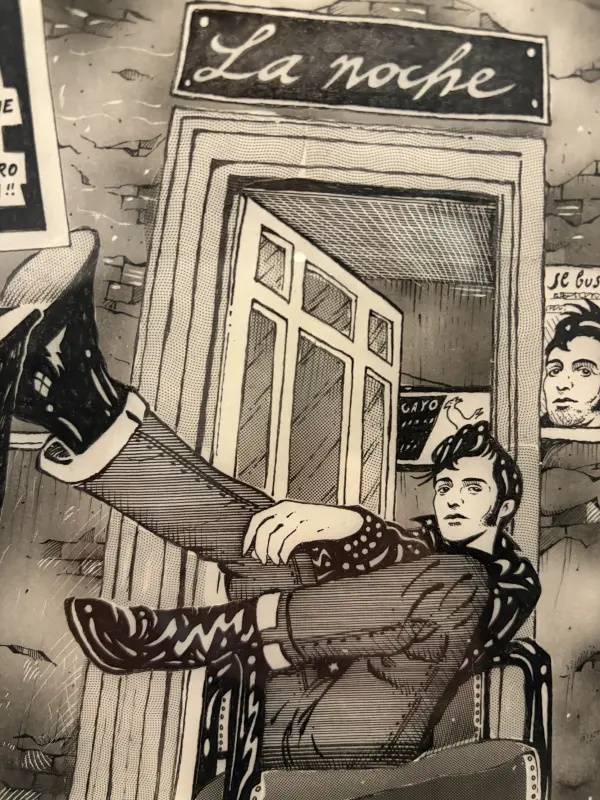
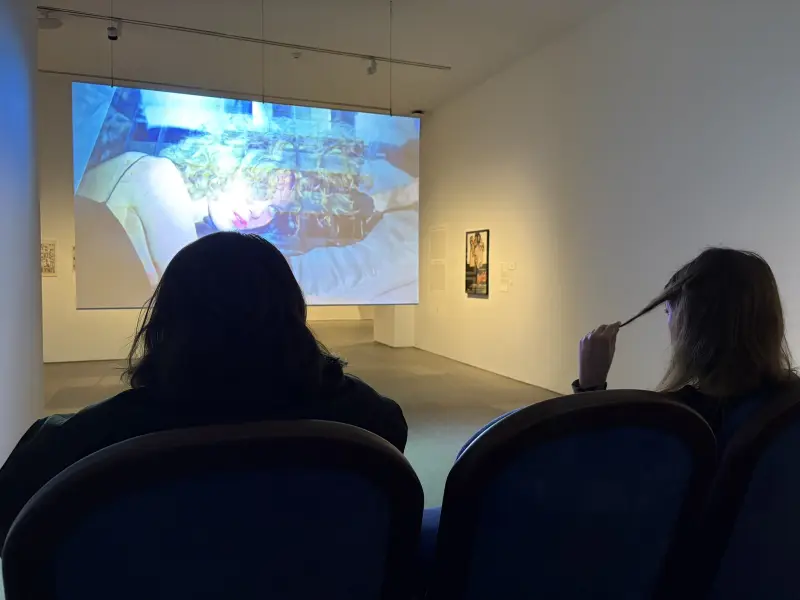
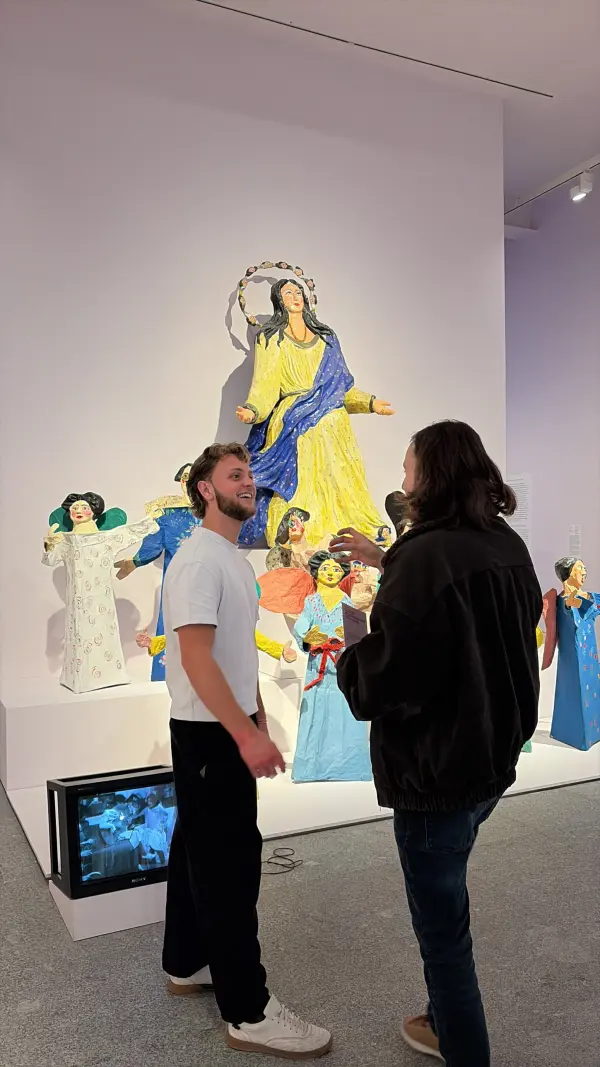
Ceesepe, Vicios modernos, drawn in Madrid in 1978.A night-life character from the Movida rooms.Ceesepe’s painted board for La Vaquería bar on calle de la Libertad: Spanish, English and French in one sign.A film projection in the collection rooms.Oran and David talking, only in Spanish, among the papier-mâché saints and angels in the Movida rooms.
Also on the way: Belkis Ayón
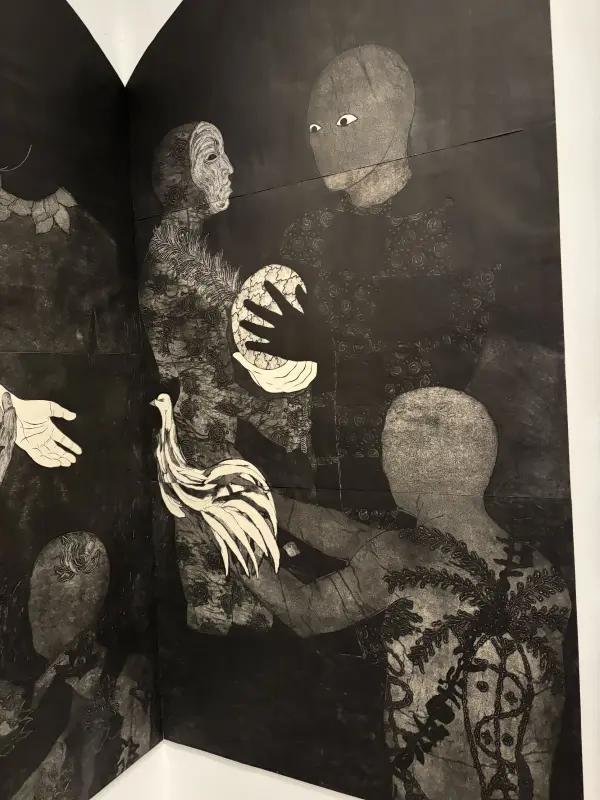
On the way out we stopped at a huge black-and-grey print by Belkis Ayón (1967–1999), the Cuban printmaker known for her collagraphs inspired by the Abakuá, an Afro-Cuban secret society. Her figures have no mouths, only eyes, and they pull you in. It was a good reminder that the Spanish-speaking world goes well beyond Spain.
A large collagraph by the Cuban artist Belkis Ayón.
Between the Civil War rooms and La Movida, Oran left with a real sense of how contemporary Spain was made, and plenty to say about it in Spanish.
IntrusoBar de blues
Live blues at Bar Intruso
We ended the trip with a live blues show at Bar Intruso. Blues in Madrid, played to a bar full of locals and visitors: a fitting last night in a city that is as cosmopolitan as it is Spanish.
Keys at the blues show (sound on).
A friend from Jalisco
The best surprise of the trip was not on the itinerary. David, the friend Oran made at the hostel, joined us at the Reina Sofía. He doesn't speak English, so every conversation between them was in Spanish, with no way to switch back to English when it got hard. That is exactly the kind of practice a classroom can't give you, and Oran rose to it.
The friendship is carrying on after Madrid. Oran is planning to visit David in Jalisco, and we are setting up a language exchange between them: David wants to learn English, so they will trade practice, half the time in Spanish and half in English. Oran's next trip already has a Mexican host, and his Spanish now has a reason to keep growing.
Spanish we used
¿De qué parte de México eres?
What part of Mexico are you from?
Te visito en Jalisco.
I'll come and visit you in Jalisco.
¿Hacemos un intercambio de idiomas?
Shall we do a language exchange?
Want a trip like this?
I plan every trip with the student: the city, the days, the pace and the places. In Madrid that meant art in the morning, wine with my friends at night and a market in between, all in Spanish. I can do the same in Spain or Mexico.
 Become Fluent